
In custom apparel, streetwear, and promotional merchandise markets, personalized 3D labels are becoming an increasingly popular way to enhance product identity. However, traditional screen-printed 3D labels require mold making, screen preparation, multiple printing passes, and high-frequency molding. These processes involve complicated production steps, high setup costs, and large minimum order quantities (MOQs).
For independent designers, small clothing brands, and custom printing businesses, fulfilling small orders while maintaining reasonable production costs and efficiency can be challenging.

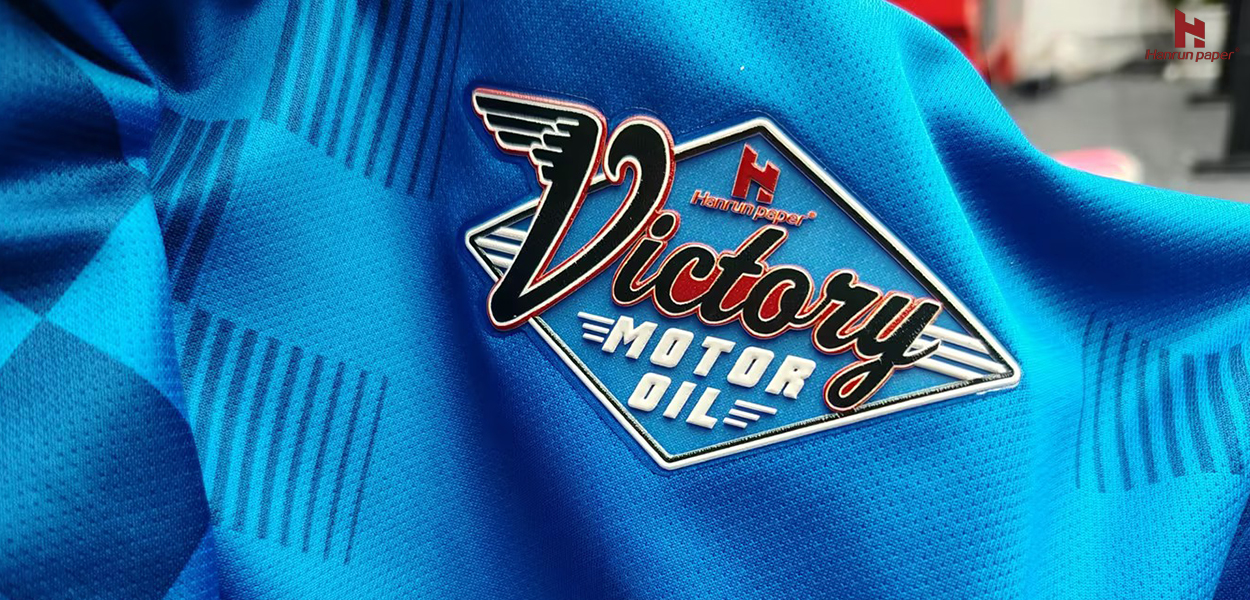
With advances in digital printing and polyurethane materials, 3D label film offers a new approach to traditional raised label production. Hanrun Paper provides a complete 3D label solution integrating specialized label film, UV 3D label ink, and supporting equipment. By eliminating traditional mold making and using digital printing and flexible cutting processes, this solution makes 3D label production more adaptable and helps businesses serve small-batch orders with a minimum order quantity of just one piece.
Traditional 3D label production typically involves engraving molds, preparing the base material, multi-screen printing, color-by-color drying, high-frequency molding to create raised effects, die-cutting and trimming, and laminating with hot-melt adhesive and release paper. The finished labels are then heat-transferred onto garments.
In terms of materials, traditional production may involve solid silicone substrates, screen printing inks, pigments, crosslinking additives, and hot-melt adhesives. Some products also require multiple processing layers to achieve different levels of raised effects.
Although this process is suitable for large-volume production with fixed designs, it has several limitations:
❌️High setup costs: Changing a design or shape usually requires new screens or molds.
❌️High minimum order quantities: Screen preparation, ink adjustment, and machine setup require sufficient order volumes to spread production costs.
❌️Limited production flexibility: Changes to graphics, colors, and raised effects require adjustments to the production process.
For brands that need frequent product launches and customized designs, traditional production methods are often less suitable for small-batch orders and multiple design variations.
Hanrun 3D label film uses thermoplastic polyurethane (TPU) as its main substrate and is paired with specially formulated 3D label ink. Digital printing creates the required raised height and surface textures.

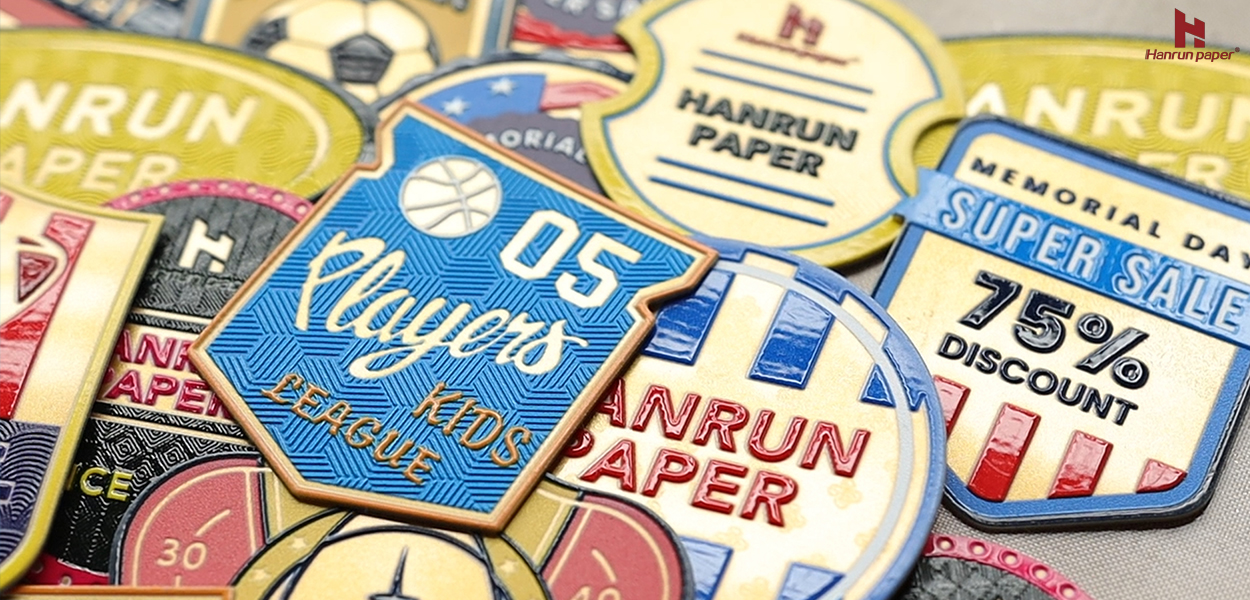
Unlike ordinary TPU films, Hanrun 3D label film features a specially engineered surface coating designed for digital inkjet printing.
Standard label films use a modified polyurethane-acrylic composite coating system, combined with rutile titanium dioxide, adhesion-promoting monomers, crosslinking agents, dispersants, and defoamers. These components help improve ink absorption and ink adhesion on the film surface.
Hanrun's dedicated UV 3D label ink uses an elastic polyurethane acrylate formulation. After UV curing, it forms an elastic polymer network structure. This allows multiple ink layers to build up three-dimensional effects while maintaining softness, stretchability, and low-temperature flexibility in the finished label.
Instead of relying on traditional molds to create raised shapes, this solution uses digital printing to control graphics, colors, and 3D height. Customers can modify designs directly on a computer without making new molds for every design, making the process more suitable for small-batch and customized orders.
Among Hanrun's 3D label film products, Label Film Clear is developed specifically for apparel logos and designs that require greater creative flexibility.
The transparent version uses a colorless, transparent modified polyurethane acrylate resin as its main coating material. It contains no titanium dioxide and uses only a small amount of transparent adhesion-promoting monomer.
This material formulation helps maintain the film's transparency while providing the surface properties required for digital printing.
According to testing under the ASTM D1003 standard, Hanrun Transparent 3D Label Film achieves:
✅Light transmittance: ≥90%
✅Haze: ≤2.5%
High light transmittance and low haze help minimize cloudiness and whitening, allowing the original colors and textures of garments to show through naturally.

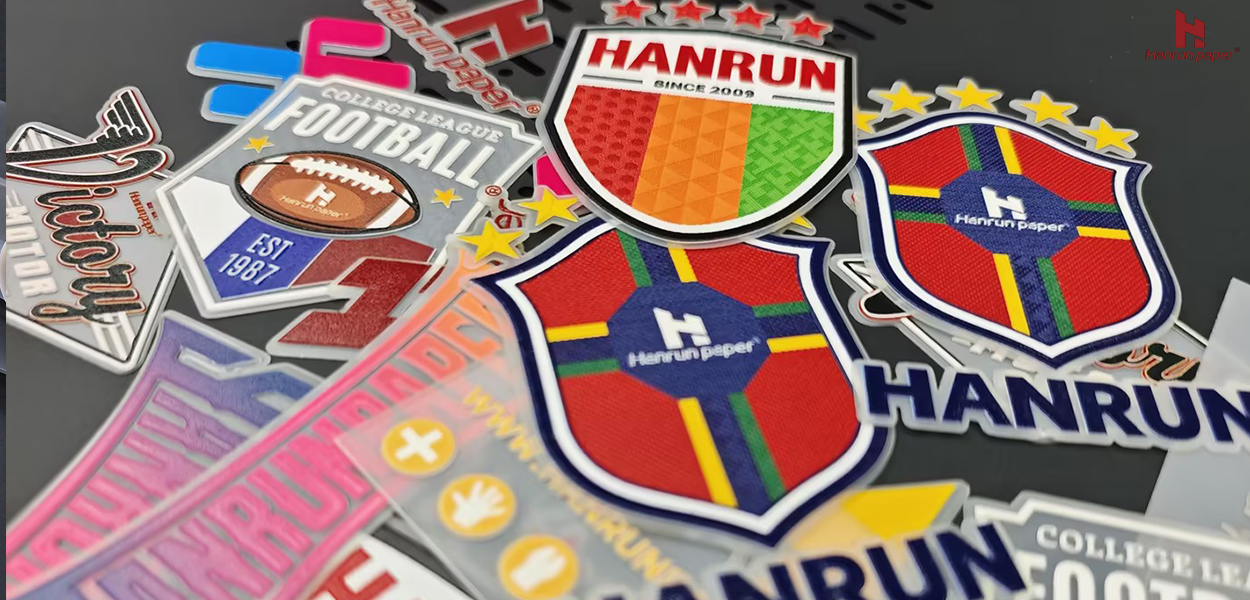
This makes the film particularly suitable for dark fabrics, fine lines, cutout lettering, and minimalist logo designs.
The transparent label film uses colorless modified polyurethane acrylate resin and is paired with Hanrun's dedicated 3D label ink.
The finished labels offer a soft feel, stretchability, and low-temperature bending resistance.
This means that 3D labels need to do more than create visible raised effects. They must also accommodate the bending and stretching that garments experience during everyday wear.
The wash durability of 3D labels depends on more than the substrate itself. Surface coatings, ink adhesion, curing performance, and heat-transfer conditions all play important roles.
Hanrun matches its specially coated label film with dedicated 3D label ink to improve bonding between the ink and film. The elastic polymer structure also helps maintain flexibility during bending and washing.
The finished labels can withstand at least 50 washing cycles, achieving a color fastness rating of Grade 4–5.
Transparent label film removes many of the design limitations associated with traditional opaque substrates. It allows different garment colors to show through naturally.
Combined with digital printing and contour cutting, it supports transparent cutout logos, geometric patterns, and customized 3D graphics, giving apparel brands greater design freedom.
In addition to material performance, dimensions, thickness, heat-transfer conditions, and compatible consumables are important considerations when selecting 3D label film.
| Specification | Details |
|---|---|
| Product Name | Label Film Clear (Transparent 3D Label Film) |
| Color | Transparent |
| Sheet Sizes | A3 / A4 |
| Roll Sizes | 0.305 × 25m, 0.305 × 50m, 0.61 × 25m, 0.61 × 50m |
| Thickness | 0.45mm |
| Transfer Temperature | 150°C–160°C |
| Heat Press Pressure | 3kg |
| Heat Press Time | 15–20 seconds |
| Required Equipment | UV flatbed printer, heat press, laser cutter or flatbed cutting machine |
| Required Consumables | UV 3D Label Ink (CMYKW), UV 3D Label Varnish (GL Varnish) |
The final quality of 3D labels depends on how well the base film, dedicated ink, printing equipment, cutting equipment, and heat-transfer process work together.
Hanrun Paper provides not only 3D label film and dedicated UV ink but also equipment recommendations based on customers' production requirements.
Recommended equipment includes:

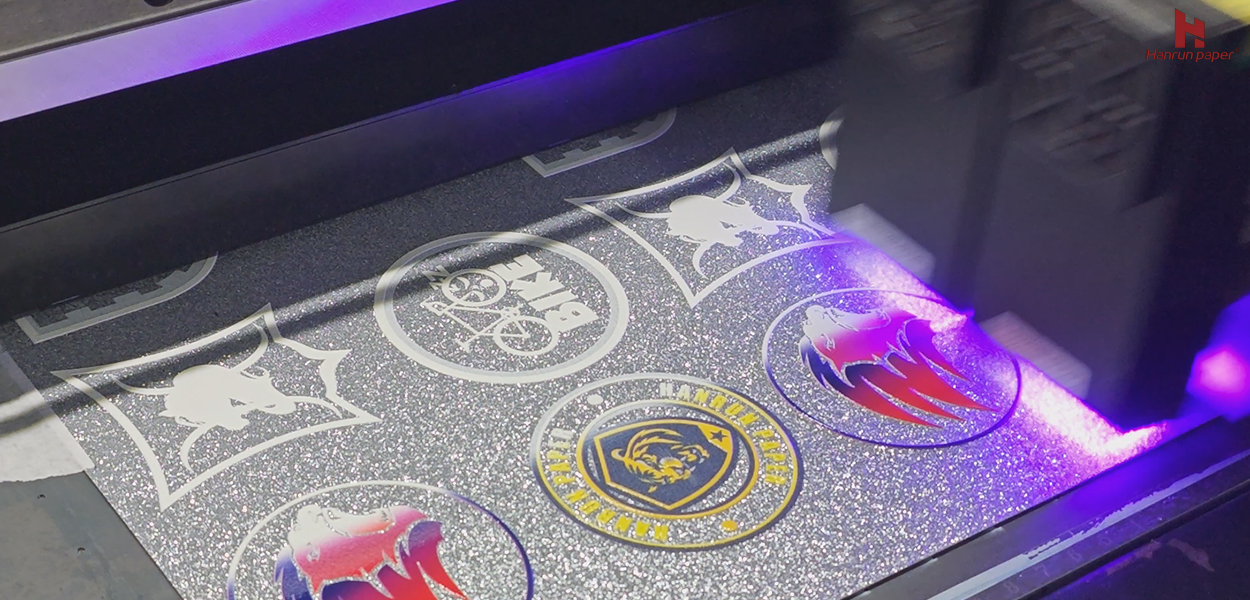
Hanrun can also recommend compatible cutting machines and heat presses to help customers establish a complete production workflow, from graphic printing and 3D ink layering to cutting and heat transfer.
Whether you produce streetwear, sportswear, promotional merchandise, or customized corporate gifts, 3D label film provides a flexible production option for businesses of different sizes.
From standard raised logos to transparent cutout labels, and from large-scale brand production to small-batch customization, Hanrun 3D label film helps turn more creative ideas into finished products.

